Artificial intelligence is developing at a frighteningly rapid rate, and the technology that once seemed out of this world is fast becoming part of our everyday lives. But what might that world look like in 168 years’ time? That’s exactly what prolific playwright Alan Ayckbourn explores in his 92nd play: The Trial of Romeo Oscar.
Set in 2194, the play follows Romeo Oscar, a military-issue android who has been accused of murder. As the first non-human to stand trial in a court of law, his landmark case raises questions about responsibility and technology.
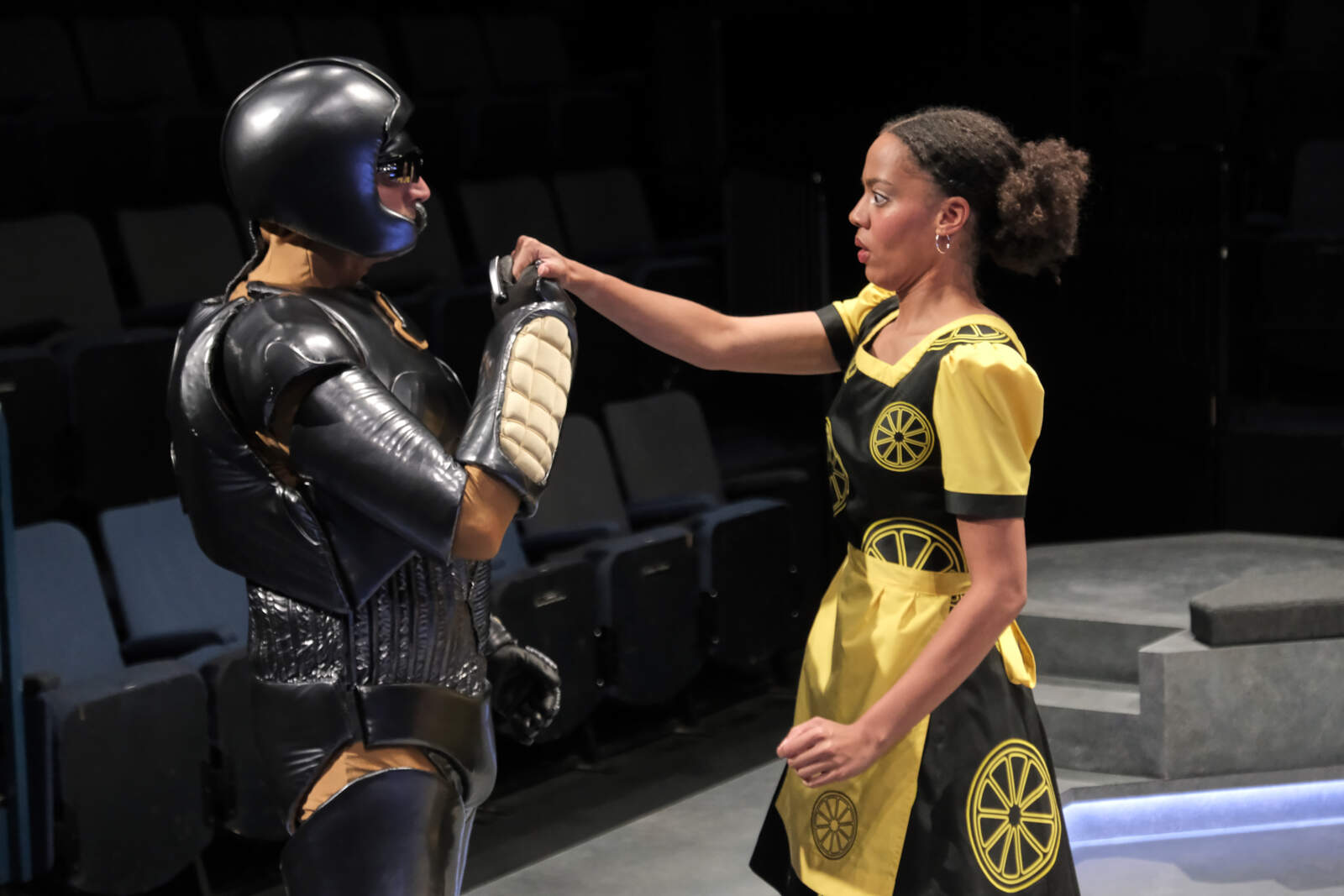
In the futuristic sci-fi, we learn that Romeo Oscar arrived on a far-away moon and raised an orphaned child named Juliet. Having acquired a download of literature, he shared the stories with the youngster, who grew to have an affinity for Shakespeare’s Romeo and Juliet – their apparent namesakes – which the duo would recite day after day as the sole inhabitants of Uranus 11.
The way in which Ayckbourn brings together an iconic piece of literature from the late 1500s with a futuristic murder trial set some 700 years later is most impressive. And anyone who caught the New Vic’s recent production of Romeo and Juliet, starring Russell Kane, may find its freshness in the mind particularly impactful.
The cast does a commendable job of bringing this strange world to life. One of the standout performances comes from Leigh Symonds as Octavius (Octo). His delivery strikes a balance between robotic and human in the same brow-raising way as when you have to watch seemingly realistic AI videos twice. It makes his character fascinating to watch, with Leigh bringing some of the show’s best comedic moments.
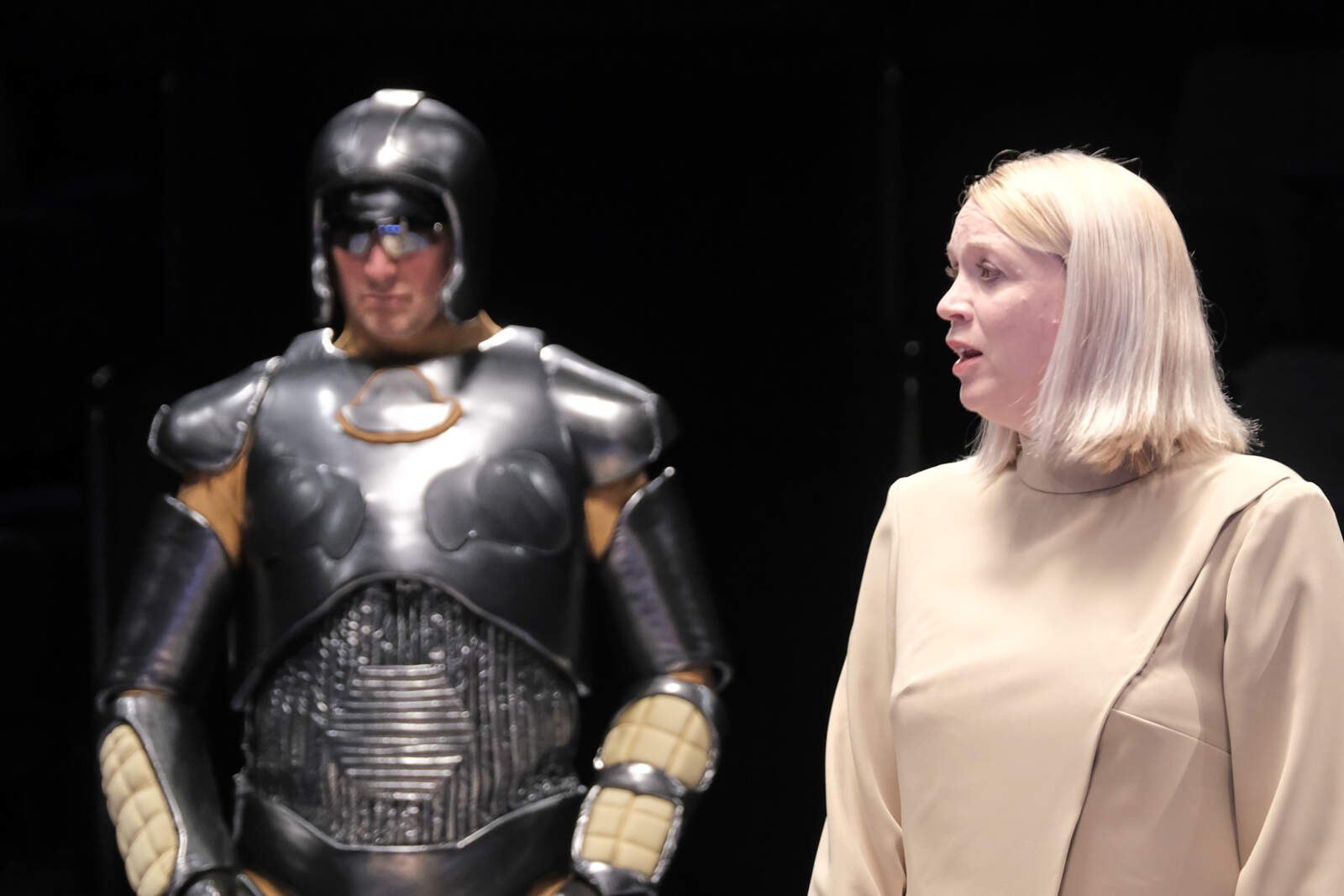
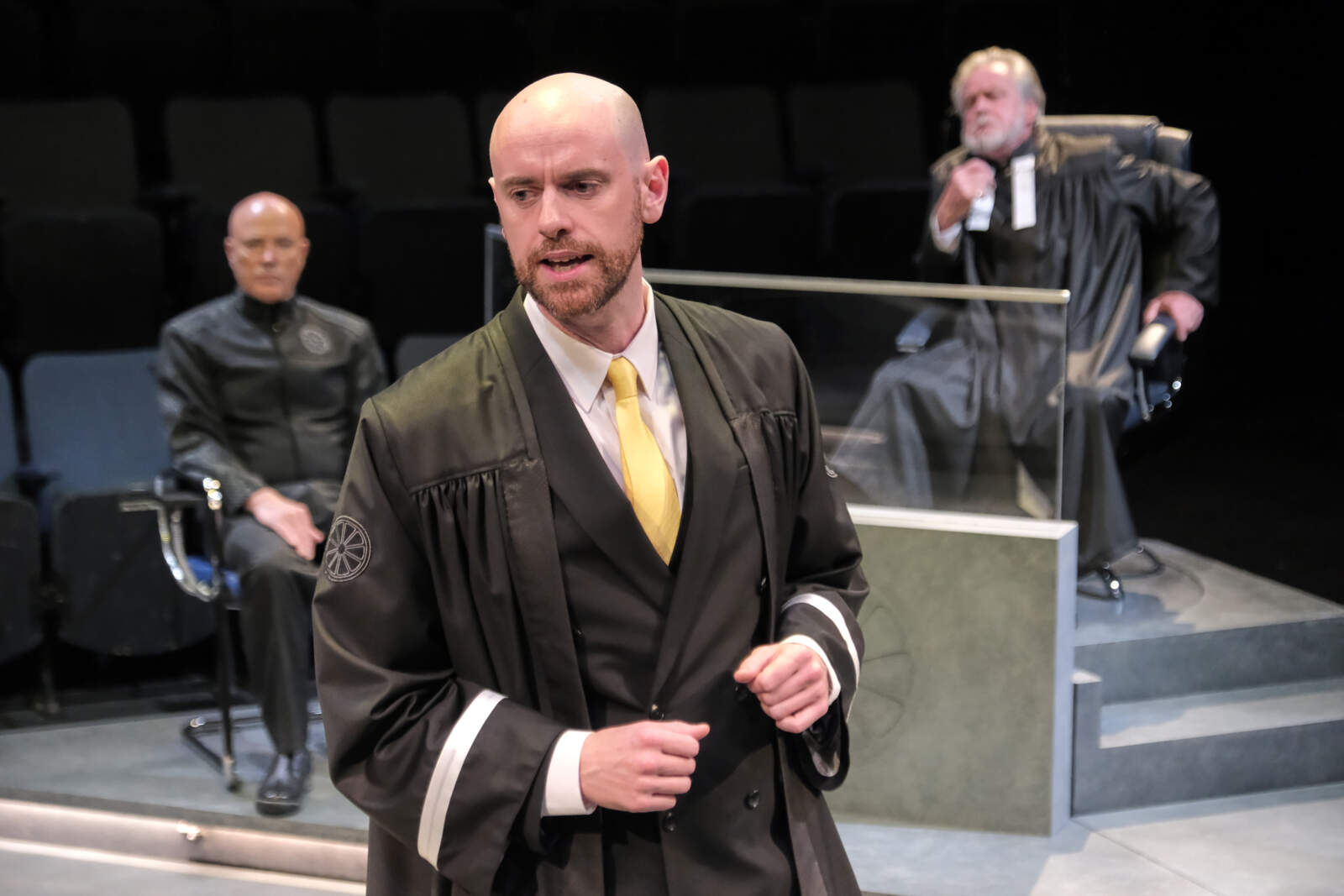
Richard Stacey does a wonderful job at developing Romeo Oscar’s character throughout, from the metal-and-wires device rolled in on a table in Act One, to the almost human, emotional bot post trial in Act Two. Frances Marshall plays his inexperienced defence counsel, Allistra Clay, with a brilliant level of clumsiness and fluster, while Hayden Wood is entirely the opposite as prosecutor Ronal Lime-Tyler, delivering his lines and swishing his cloak with all of the required arrogance the character demands.
My only criticism is that, at times, The Trial of Romeo Oscar can feel a little lengthy and some scenes could benefit from a tighter edit. Act 1 establishes the circumstances surrounding the alleged murder before the second takes us into the courtroom itself. At one point, the jury is adjourned and returns moments later, but this might have provided a better natural break for the interval, giving the audience time to consider what verdict they might have arrived at themselves.
That said, there is plenty here to get your teeth into, particularly as conversations around AI become increasingly difficult to ignore. Ayckbourn doesn’t offer easy answers, but that’s part of his appeal. What he does offer, is a timely, provocative production that challenges viewers about the use of AI and technology and how that could shape our futures.
Buy your tickets to watch The Trial of Romeo Oscar here.


